

A new survey of Nordic architecture showcases bold innovation alongside a deep commitment to rest and retreat, writes Riya Patel
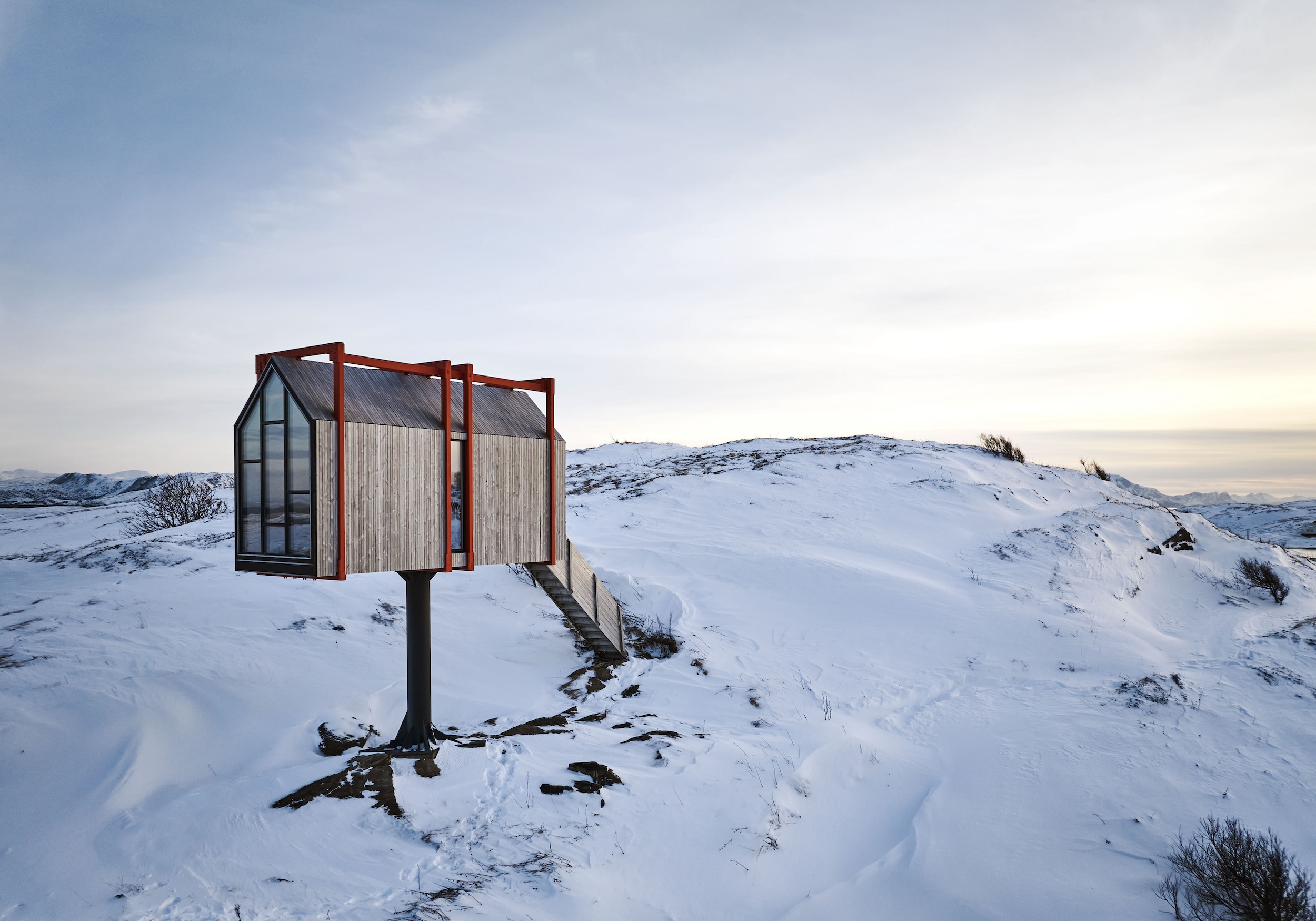
Fleinvær Refugium (2017) by Rintala Eggertsson & Tyin Tegnestue, Fleinvær, Norway. Photograph: © 2026 Richard Powers
The standout homes in “The Iconic Nordic House”—the latest compendium of a series on striking residential architecture—are designed to protect from wild and rugged landscapes. They offer spectacular views of nature from a safe and warm place. Even in urban examples, there’s a sense of interior space as a retreat from the outer world.
That domestic coziness has been construed into a number of popular lifestyle trends, notably the Danish concept of hygge. Yet as this new survey shows, there is much more to the Nordic sensibility. Binding these extraordinary homes from the past 125 years is the luxury of tranquility and a deep philosophy of quality, craft and care.
“There’s real sensitivity to the landscape that you see in both contemporary Nordic architecture and the past,” says author Dominic Bradbury, whose research took him to far-flung islands and archipelagos as well as the Scandinavian mainland. “There’s use of organic material and natural textures, even if the forms and composition are very modern.”
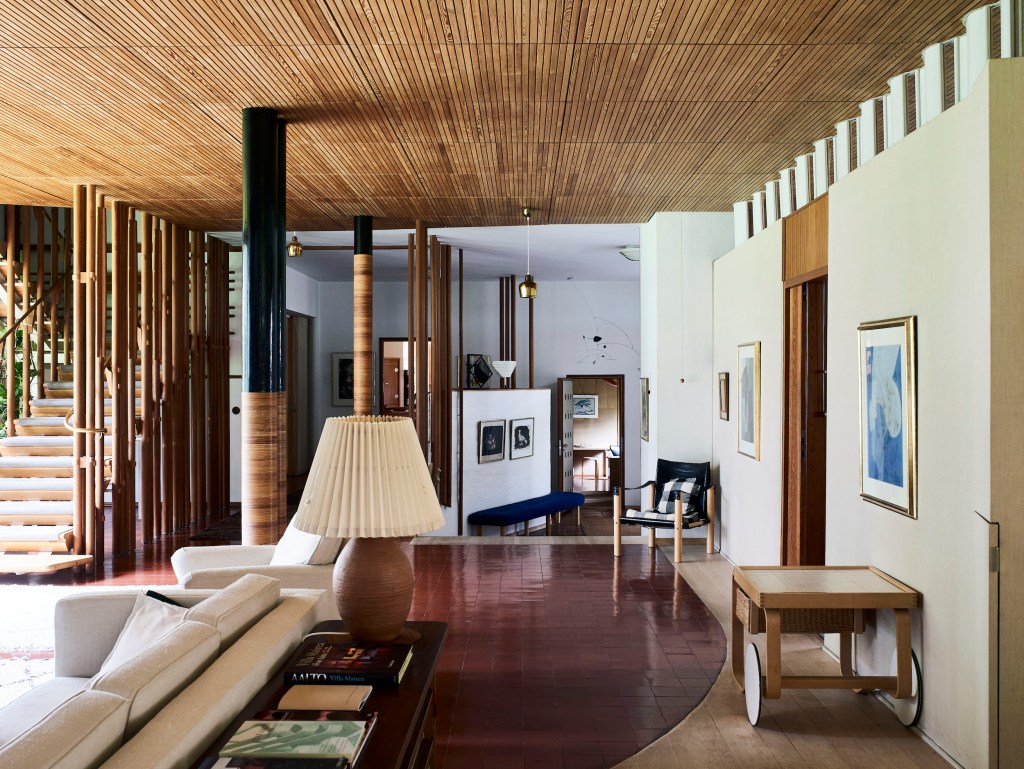
Villa Mairea (1939) by Alvar Aalto, Noormarkku, Finland. Photograph: © 2026 Richard Powers
The timber-panelled ceiling and forest-like columns of Alvar Aalto’s Villa Mairea (1939) in Ahlström Noormarkku, Finland, exemplify a softer, more layered type of modernism. The house’s design cleverly adapts the usual language of pristine white forms with local materials and reverence to the Finnish landscape.
Although mid-century style has become associated with the Nordics, the book shows regional variations in constant play with multiple ideas and aesthetics. “I think that there is a real spirit of innovation in Nordic architecture,” says Bradbury. “These architects were at the vanguard of a lot of different styles and movements.”
The experimental prefab plastic Futuro House (1968) by architect-designer Matti Suuronen is a stark departure from the typically spare Nordic look. The cliffside creative atelier Nurmesniemi House (1975) on Kulosaari island is another Finnish outlier. Its generous double-height spaces and exposed steel structure make it more akin to the famously inventive Eames Case Study House in California.
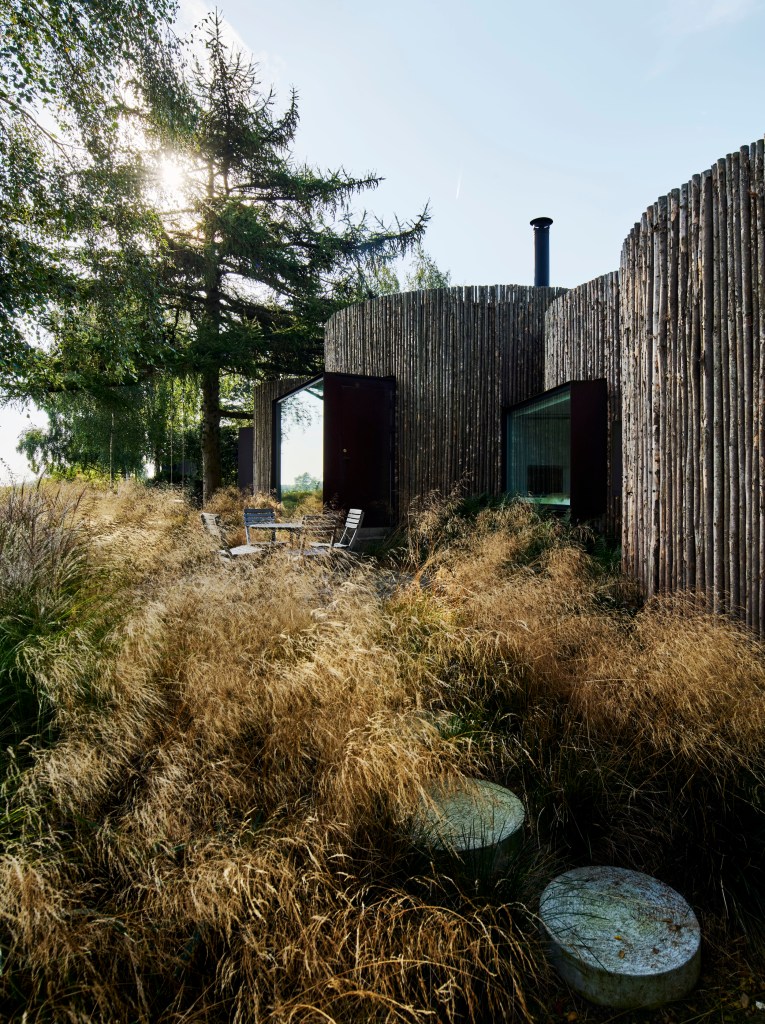
Villa Birkedal (2016) by Jan Henrik Jansen, Møn, Denmark. © 2026 Richard Powers
More recent homes manifest a quest for innovation in their mastery of sustainable technologies. Blending with the birches on the Danish island of Møn is Villa Birkedal (2016) by Copenhagen-based architect Jan Henrik Jansen. A cluster of cylindrical volumes is clad in rough tree trunks, making the lustrous brass kitchen island inside all the more surprising. For the cubist Villa Sagalid (2023) on the Stockholm archipelago, architects Sandell Sandberg chose bespoke ceramic cladding to withstand water and rain, but also to catch the light so the building shimmers.
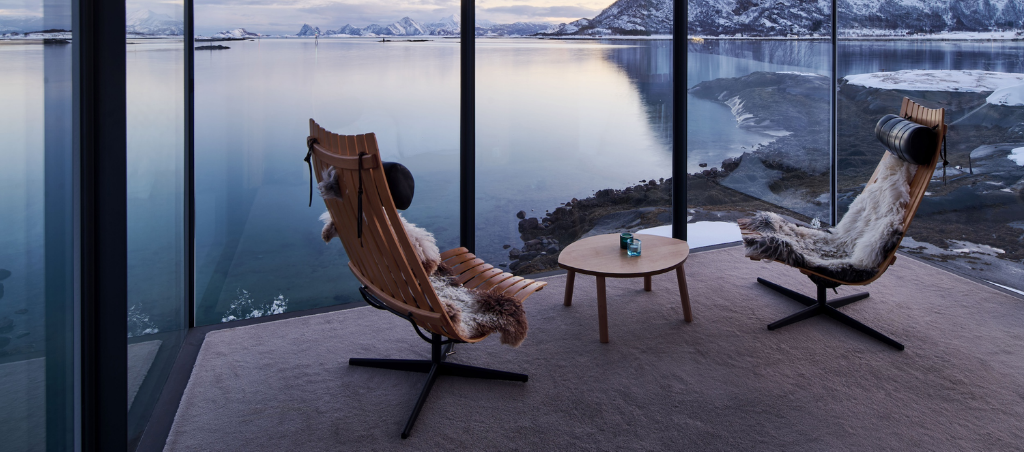
The sheer number of sea cabins, summer houses, coastal escapes, mountain retreats and treehouses show how architecture integrates with a commitment to leisure and family time. In Norway, PAN Tretopphytter (2018), a trio of A-frames on stilts by Espen Surnevik, immerse guests among the trees of a farm in Gjesåsen, while Snorre Stinessen’s timber-lined Manshausen Cabins (2023), built on a private island in the Steigen archipelago, feel gloriously isolated in the dramatic fjords.
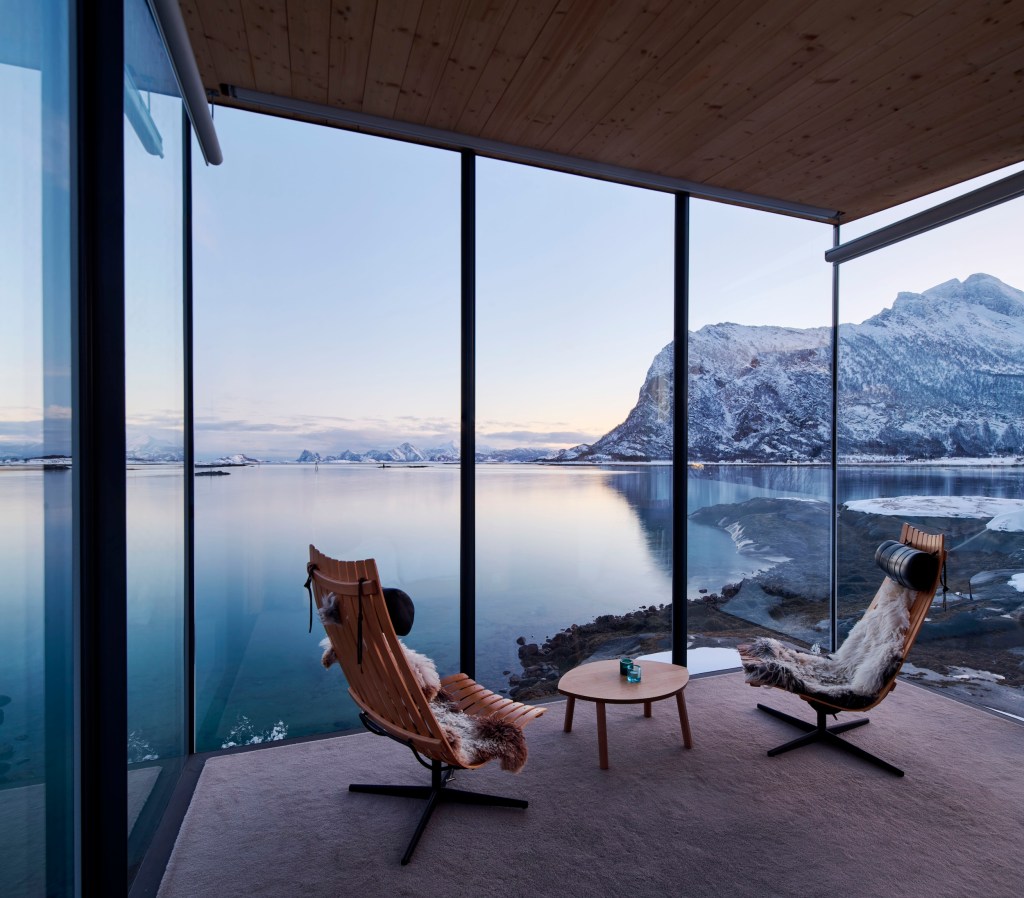
Manshausen Sea Cabins (2015) by Snorre Stinessen, Manhausen Island, Norway. Photograph: © 2026 Richard Powers
Although some are too remote or compact to be permanent homes, these treasured holiday spots can be kept in families for generations and returned to year after year. “The craft and quality is often quite extraordinary,” says Bradbury. “I think there’s a luxurious element in the way these buildings are designed and then put together.”
Time, space and immersion in nature unite this most enviable collection of Nordic architecture. Wherever in the world we live, there are plenty of lessons to take home on the art of living well.
“The Iconic Nordic House: Modern Masterworks Since 1900” is published by Thames & Hudson